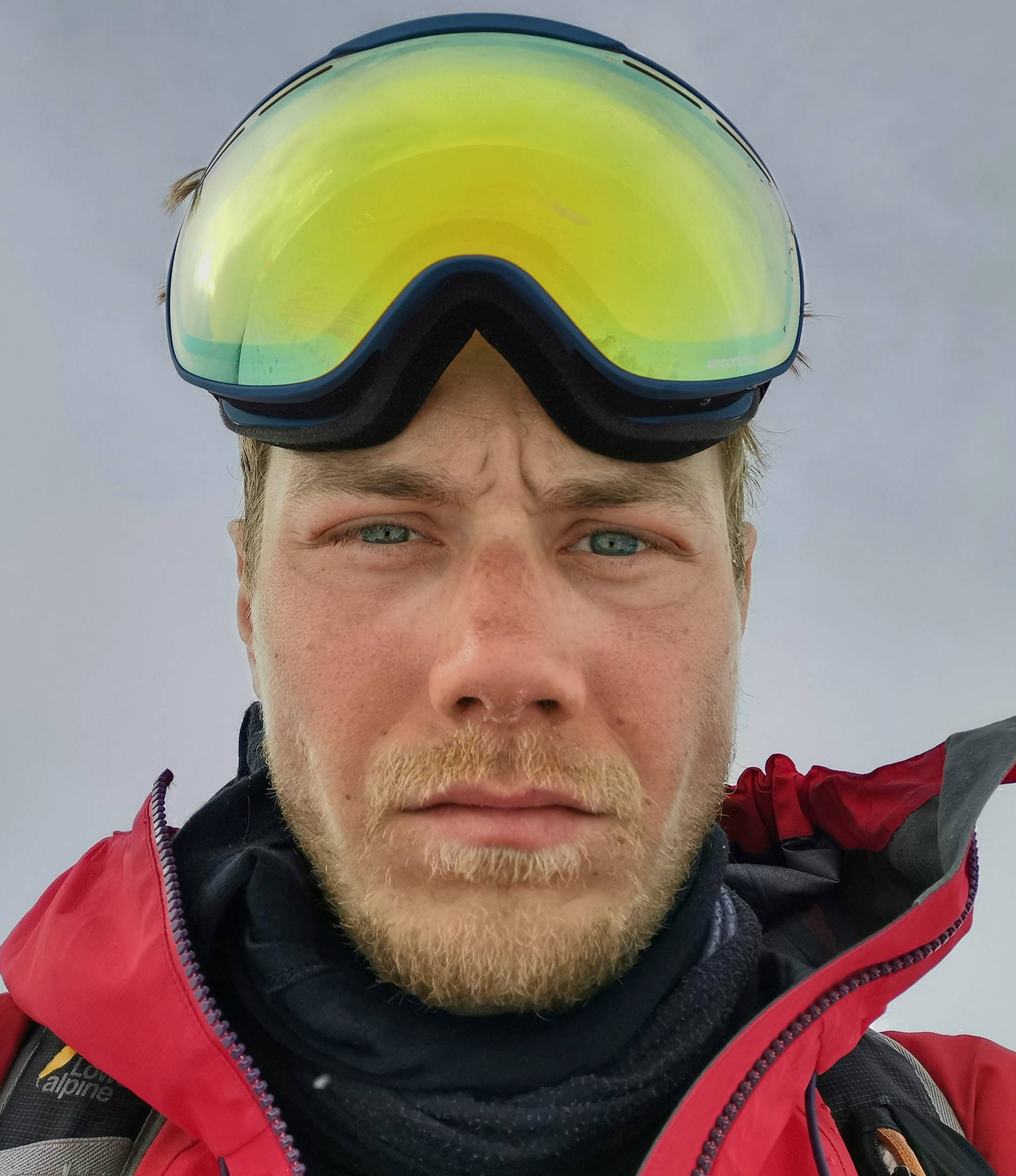
A British adventurer, speaker, and expedition leader, Oli France has spent over a decade navigating the world's most remote and hostile environments. Oli attempts to traverse the length of Lake Baikal, solo: March 2020.
If someone had offered to drill a hole in my head to relieve the pressure, I'd have said 'Yes,' in an instant.
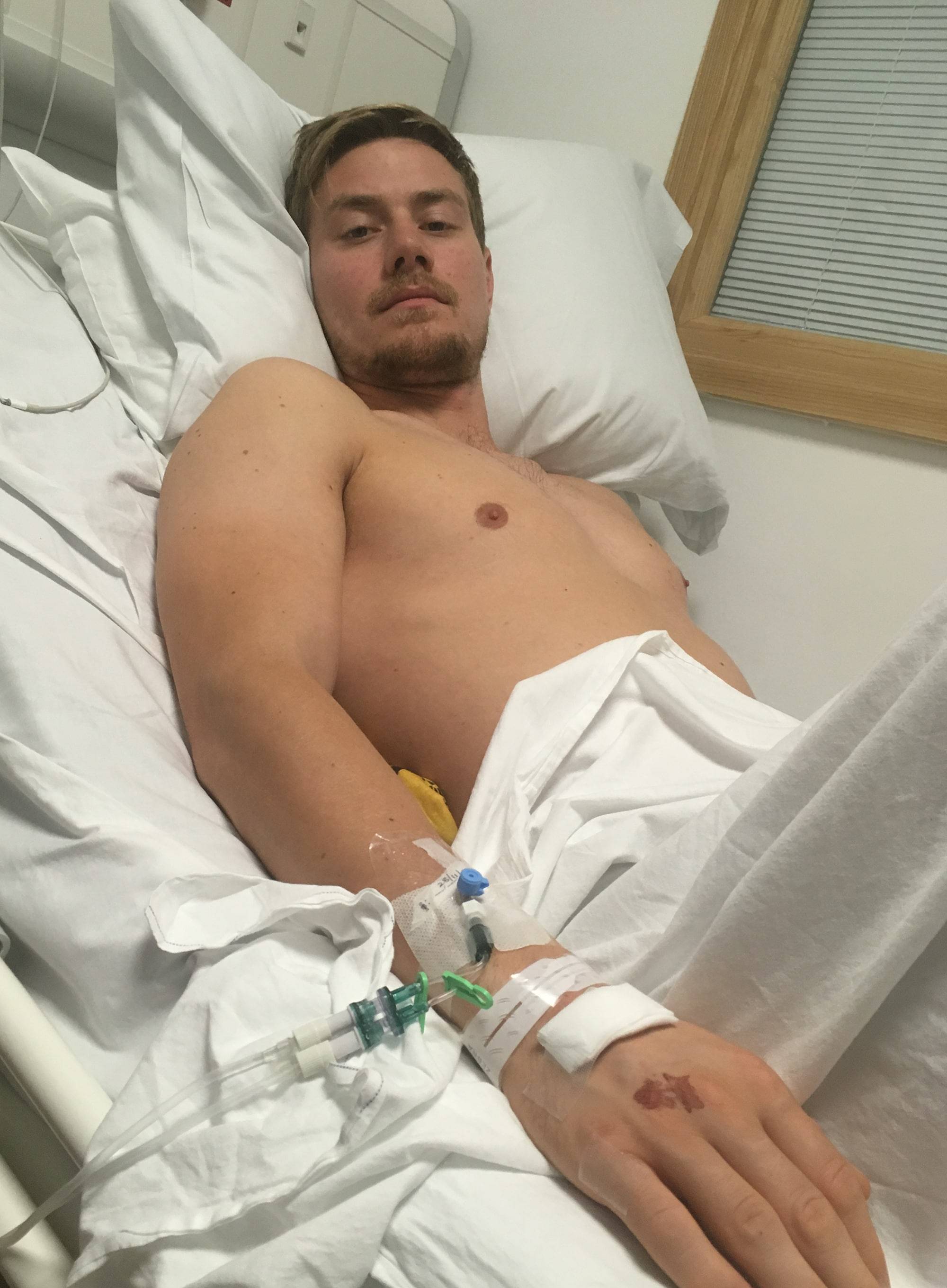
It all started with a camel burger in Somalia. At least, that was my conclusion as I lay in a UK hospital bed a week later. I had contracted a dire concoction of illnesses. First, shigella, which causes fever and dysentery. Then meningitis, which made me feel like my brain might explode through my skull. I have never been so ill, and for a time I worried I might be fatally unwell.
In three months, I had planned to embark on my most demanding expedition yet: to cross the full length of Lake Baikal - the world's largest freshwater lake - which sits in the heart of Russia. Measuring 400 miles, it is forty times the length of England's largest lake. Each winter, as temperatures plummet below minus 40°C, a thick slab of surface ice encrusts the mile-deep lake.
The ice, while one metre thick in parts, is constantly moving, cracking, and shuddering. This movement leaves swathes of ice rubble as big as cars. There can be massive open-water channels, and jagged four-metre-high pressure ridges. Thermal springs create treacherously thin ice in parts, and some remote sections are one-hundred miles from civilisation. History holds countless stories of people meeting an icy grave in the black depths of Lake Baikal.
My legs looked thin and weak when I returned home from hospital. I had shed two stone, lost much of my fitness, and still endured crushing headaches. More bad news compounded my decline: my trusted expedition partner was dropping out, and a crucial source of funding had fallen through. As my mind ebbed from its haze, my focus remained gripped by Lake Baikal. I could not let it go.
Going solo brought a whole new tier of preparation — from satellite phones, self-rescue ice picks and piles of cash for emergency Russian helicopters, to dark breathless evenings hauling a sled around a wet field in northern England. If I was going to do this, I could not afford to leave anything to chance.
Three months later, in early March 2020, I was deposited on the frozen lakeshore in the bleak Siberian village of Kultuk. It would be sixteen days before my feet would touch solid earth again. For months, nightmares had plagued me — each vision had me breaking through the ice never to be seen again. Alone, I would have nobody to haul me free. Only a rapid self-rescue could prevent frostbite, or something much worse.
On day one, adrenaline helped me cover almost thirty miles. As I checked my GPS that night, however, it barely looked like I'd started. The sheer scale of Lake Baikal was beginning to dawn on me.
As the days ticked by, I averaged roughly a marathon each day. I would journey for 12 hours, keeping up my 6000-calorie daily diet, then spend evenings melting snow, rehydrating meals and planning. Sundown always brought a sudden twenty-degree temperature drop, and the ice responded with an orchestra of bangs and echoes. Many restless nights were spent praying not to be swallowed by the lake.
Near the halfway point at Olkhon Island, I got rare phone signal and video-called my wife, Emma, before leaving civilisation behind. What happened next flipped my expedition on its head: I was going to be a father. At 2am my sense of danger peaked. In that moment, I decided to do it for the little one.
With every northward mile the temperature dropped and the snow deepened. My hefty sled, which once skimmed across bare ice, now acted like an anchor. My pace slowed to one mile an hour. This is what I had signed up for, and I had already come so far. Suffering is an inevitable component of challenging expeditions — one of the things we seek, but it has a habit of arriving in our weaker moments.
Four days later, as smoke and golden lights signalled civilisation, I knew my journey was almost complete. I was soon to become one of very few people to trek the full length of Lake Baikal solo, and I had done so four days quicker than planned. Emma revealed that Covid-19 was rapidly seizing the world and there were only a few days left to get out of Russia. I landed back in the UK on one of the last flights out, on the first day of lockdown.
My twenties had been filled with wild expeditions. In a few months I would turn thirty and become a dad. Time would bring bolder dreams and wilder schemes — but it would also force me to face one of the hardest pursuits of all: the quest to find adventure, and meaning, in the valleys as much as on those lofty peaks in our mind.
Oli France is an adventurer, speaker and expedition leader who has led teams in some of the world's wildest places across more than 75 countries.
Gallery



Below The Surface
A British adventurer, speaker, and expedition leader, Oli France has spent over a decade navigating the world's most remote and hostile environments. Oli attempts to traverse the length of Lake Baikal, solo: March 2020.
If someone had offered to drill a hole in my head to relieve the pressure, I'd have said 'Yes,' in an instant.
It all started with a camel burger in Somalia. At least, that was my conclusion as I lay in a UK hospital bed a week later. I had contracted a dire concoction of illnesses. First, shigella, which causes fever and dysentery. Then meningitis, which made me feel like my brain might explode through my skull. I have never been so ill, and for a time I worried I might be fatally unwell.
In three months, I had planned to embark on my most demanding expedition yet: to cross the full length of Lake Baikal - the world's largest freshwater lake - which sits in the heart of Russia. Measuring 400 miles, it is forty times the length of England's largest lake. Each winter, as temperatures plummet below minus 40°C, a thick slab of surface ice encrusts the mile-deep lake.
The ice, while one metre thick in parts, is constantly moving, cracking, and shuddering. This movement leaves swathes of ice rubble as big as cars. There can be massive open-water channels, and jagged four-metre-high pressure ridges. Thermal springs create treacherously thin ice in parts, and some remote sections are one-hundred miles from civilisation. History holds countless stories of people meeting an icy grave in the black depths of Lake Baikal.
My legs looked thin and weak when I returned home from hospital. I had shed two stone, lost much of my fitness, and still endured crushing headaches. More bad news compounded my decline: my trusted expedition partner was dropping out, and a crucial source of funding had fallen through. As my mind ebbed from its haze, my focus remained gripped by Lake Baikal. I could not let it go.
Going solo brought a whole new tier of preparation — from satellite phones, self-rescue ice picks and piles of cash for emergency Russian helicopters, to dark breathless evenings hauling a sled around a wet field in northern England. If I was going to do this, I could not afford to leave anything to chance.
Three months later, in early March 2020, I was deposited on the frozen lakeshore in the bleak Siberian village of Kultuk. It would be sixteen days before my feet would touch solid earth again. For months, nightmares had plagued me — each vision had me breaking through the ice never to be seen again. Alone, I would have nobody to haul me free. Only a rapid self-rescue could prevent frostbite, or something much worse.
On day one, adrenaline helped me cover almost thirty miles. As I checked my GPS that night, however, it barely looked like I'd started. The sheer scale of Lake Baikal was beginning to dawn on me.
As the days ticked by, I averaged roughly a marathon each day. I would journey for 12 hours, keeping up my 6000-calorie daily diet, then spend evenings melting snow, rehydrating meals and planning. Sundown always brought a sudden twenty-degree temperature drop, and the ice responded with an orchestra of bangs and echoes. Many restless nights were spent praying not to be swallowed by the lake.
Near the halfway point at Olkhon Island, I got rare phone signal and video-called my wife, Emma, before leaving civilisation behind. What happened next flipped my expedition on its head: I was going to be a father. At 2am my sense of danger peaked. In that moment, I decided to do it for the little one.
With every northward mile the temperature dropped and the snow deepened. My hefty sled, which once skimmed across bare ice, now acted like an anchor. My pace slowed to one mile an hour. This is what I had signed up for, and I had already come so far. Suffering is an inevitable component of challenging expeditions — one of the things we seek, but it has a habit of arriving in our weaker moments.
Four days later, as smoke and golden lights signalled civilisation, I knew my journey was almost complete. I was soon to become one of very few people to trek the full length of Lake Baikal solo, and I had done so four days quicker than planned. Emma revealed that Covid-19 was rapidly seizing the world and there were only a few days left to get out of Russia. I landed back in the UK on one of the last flights out, on the first day of lockdown.
My twenties had been filled with wild expeditions. In a few months I would turn thirty and become a dad. Time would bring bolder dreams and wilder schemes — but it would also force me to face one of the hardest pursuits of all: the quest to find adventure, and meaning, in the valleys as much as on those lofty peaks in our mind.
Oli France is an adventurer, speaker and expedition leader who has led teams in some of the world's wildest places across more than 75 countries.
Gallery